
This post contains affiliate links. If you make a purchase from one of the links, we may earn a commission at no extra cost to you.
White vs Yellow vs Red Miso: What Time Does to a Tub of Soybeans
That tub of miso in your fridge door has a color, and the color is really a clock. What separates white vs yellow vs red miso is mostly time, plus a few choices made on day one that decide how fast the color comes.
A tub of Kyoto white miso can be ready in a few weeks. The darkest miso in Japan, made by two old breweries in the city of Okazaki, sits under three tons of river stones for more than two years before anyone opens the barrel. Same family of ingredient. Wildly different flavor.
White vs Yellow vs Red Miso
Every miso starts with koji: steamed rice (or barley, or soybeans) grown over with a mold called Aspergillus oryzae. The mold’s enzymes do the real work. They break starch down into sugar and protein down into amino acids, including glutamate, the source of miso’s deep, savory umami.
Then those sugars and amino acids start reacting with each other. It’s the Maillard reaction, the same chemistry that browns the crust on a steak, except here it happens at cellar temperature over months instead of in a hot pan over minutes. The longer miso ages, the further that reaction runs, and the darker and deeper the paste becomes.
Producers steer the result with three levers:
- Koji ratio. More rice koji means more sugar, so a sweeter, paler paste. Less koji pushes the miso toward salt and savor.
- Salt. Salt slows fermentation down. Most miso is made with around 12 percent salt. White miso uses roughly 5 to 7 percent, which is why it can be ready so quickly.
- How the beans are cooked. Boiling soybeans leaches sugar and protein out into the cooking water, which keeps the paste light. Steaming keeps them in the bean, so browning gets a head start.
The colors are categories, not recipes. In Japan, miso is sorted into red, light-colored, and white, with plenty of overlap at the edges. “Yellow” is the usual English name for that middle, light-colored group.
White Miso: Young, Sweet, and Gentle
White miso, shiro miso, is miso caught early. The classic version is Kyoto’s saikyo miso, made with a lot of rice koji (often about twice as much koji as soybeans by weight), very little salt, and a fermentation measured in weeks rather than months. The result is pale, smooth, and noticeably sweet, closer to a savory custard than a salty paste.
That sweetness makes white miso the one to reach for when you want depth without weight. It whisks into salad dressings, softens into butter, and turns into a glaze that caramelizes fast under the broiler. Kyoto cooks marinate fish in it for a day or two before grilling, the technique behind the miso-marinated black cod that helped make chef Nobu Matsuhisa famous. This miso-glazed salmon recipe works on the same principle. White miso even works in desserts, where it reads more like salted caramel than soup.
One thing to know before you shop: many tubs labeled “white miso” in American supermarkets aren’t true saikyo. They’re often a lighter Shinshu-style miso, still pale, but saltier and far less sweet. Taste yours before following a recipe that assumes the Kyoto kind.
Like all miso, white miso doesn’t like a hard boil. Stir it in at the end, off the heat or close to it, and its aroma stays intact.
Yellow Miso: The Everyday Workhorse
If Japan has a default miso, it’s yellow. Most of it is Shinshu miso, from Nagano Prefecture in the mountains west of Tokyo, which by most estimates produces somewhere between 40 and 50 percent of all the miso made in Japan. It’s a rice miso, golden to light brown, fermented for a few months to around a year.
Its dominance has a surprisingly specific origin. When the Great Kanto Earthquake devastated Tokyo in 1923, the city’s own miso makers were ruined along with everything else, and Nagano shipped in Shinshu miso as part of the relief effort. Tokyo got used to it. The rest of the country followed.
Yellow miso tastes brighter and saltier than white, with a mild tang and much less sweetness. It’s the most adaptable of the three, and the one to buy if you’re only buying one. It makes an everyday miso soup, anchors a bowl of miso ramen, loosens with a little mirin into a glaze for eggplant or chicken, and disappears into stir-fry sauces, braises, and roasted vegetables without bossing them around.


Red Miso: Two Summers and Two Winters
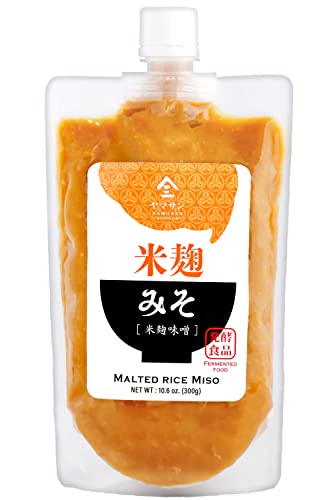
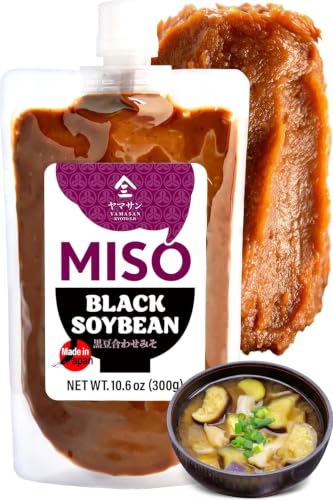
Red miso, aka miso, is what happens when you let miso keep going. The beans are usually steamed rather than boiled, the koji ratio is lower, the salt runs around 12 to 13 percent, and the paste ages for a year or more. All that time lets the Maillard reaction run its course, and the color slides from tan to reddish brown to something close to mahogany.
The flavor follows the color: salty, deep, and savory, with a faint roasted, slightly bitter edge. Red miso doesn’t whisper. It belongs in food that can stand up to it, like long-braised pork, beef stews, hearty winter soups, and marinades for red meat. A tablespoon stirred into braised short rib or a pot of chili does what a splash of soy sauce does, only rounder.
At the far end of the scale is Hatcho miso, the darkest and most famous miso in Japan. It’s made from soybeans, salt, and soybean koji only, with no rice at all, by just two breweries in the city of Okazaki in Aichi Prefecture. They face each other across the old Tokaido highway in a neighborhood once called Hatcho, “eight cho,” because it sat eight units of distance (about 870 meters) west of Okazaki Castle. One of them, Maruya, traces its brewing back to 1337.
The method has barely changed. The soybean mash is packed into cedar barrels that hold about six tons each, then weighted with roughly three tons of river stones, stacked by hand into cones built to stay standing through an earthquake. Then it sits for at least two summers and two winters. In nearby Nagoya, it goes into miso katsu and the thick, bubbling noodle dish miso nikomi udon. Anywhere else, a little goes a very long way.
Still Getting Darker
Stand in front of that fridge case again and the three tubs look different. They aren’t three recipes. They’re one idea, stopped at three different moments. White is miso eaten young. Red is miso left alone long enough to become something else.