
This post contains affiliate links. If you make a purchase from one of the links, we may earn a commission at no extra cost to you.
Same Vine, Different Spice: White Pepper vs Black Pepper
There are two pepper jars in my kitchen: the bold black one and the pale, polite white one. Here is a fun fact about white pepper vs black pepper: they came off the same vine. Same dangling clusters of berries. The difference is when the berries were picked and what happened next. For the white ones, what happened next was a week underwater while bacteria ate away their skins.
That difference is big enough that anyone who cooks seriously should treat them as two separate spices.
White pepper is not a milder black pepper. It is not just a prettier option for people who don’t want dark flecks in their mashed potatoes. It has a different smell, a different kind of heat, and a different list of dishes where it is exactly the right call.
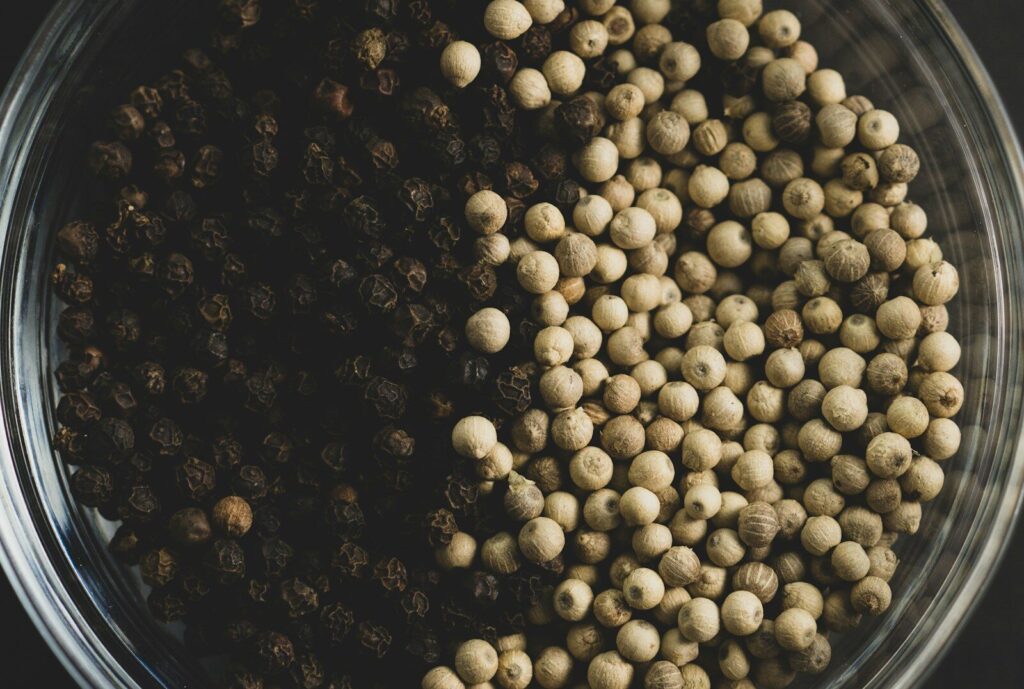
One Vine, Two Fates
Every peppercorn starts as a small berry on a dangling spike, a bit like a skinny bunch of grapes. What it becomes depends on when it is picked.
Black pepper is picked early. The berries are fully grown but still green. Farmers pile them in heaps to start the darkening, strip them from the stalks, and spread them in the sun for three to five days. Many dip them in boiling water for about a minute first, which speeds the browning and gives an even, glossy black.
The skin darkens through the same kind of enzyme reaction that turns a cut apple brown. Then it shrivels tight around the seed. That wrinkled black coat is not packaging. It holds much of the aromatic oil that makes freshly cracked pepper smell like pepper.
White pepper waits. The berries stay on the vine until they turn bright red. In the traditional method, they are packed into sacks and sunk in slow-running water for about a week. Bacteria go to work on the skin, a process called retting, until it slides loose. Workers trample or rub away the softened flesh, wash the bare seeds, and dry them in the sun until they turn the color of cream.
What’s left is the pit of the fruit, stripped of everything around it. It is a lot of effort for a little spice. A hundred pounds of ripe berries yields only about 25 pounds of white pepper, which goes a long way toward explaining the price on the jar.
Not every jar is made this way. Some producers boil unripe berries and rub the skins off, skipping the soak. And when white pepper is in short supply, some of it is simply black pepper with the dark coat milled off by machine.
The Smell
Crack a black peppercorn and you get two things at once: fragrance, then bite. Strip the skin away and most of that fragrance goes with it. What’s left is heat without the perfume.
White pepper tastes earthier and flatter, and its warmth lands lower, at the back of the throat rather than the tip of the tongue. Because nothing aromatic arrives first to soften the blow, many cooks find it hits harder than its black twin.
Where White Pepper Is the Whole Point
In American kitchens, white pepper is the backup jar. In much of the world, it is the main event.
China. If a Chinese recipe calls for pepper, it almost always means white. It goes into marinades, stir-fries, congee, and wonton broth. It is also the secret behind a takeout classic: the slow, building heat in a good hot and sour soup comes from white pepper, not chili. Cantonese salt-and-pepper squid and pork chops lean on it too. Here, white pepper’s earthy funk is not a flaw to hide. It is the flavor.
Thailand. Thai cooks pound white peppercorns with garlic and cilantro root into a paste called saam-gler. It is the base of marinades for grilled pork and chicken, and it goes into gaeng jued, a classic clear soup. Black pepper’s floral top notes would pull against the lemongrass and lime that surround it. White pepper just adds warmth and gets out of the way.
Scandinavia. In Sweden especially, white pepper has long been the traditional choice. It sits alongside allspice in proper Swedish meatballs, where its muskier warmth suits the cream sauce and lingonberries better than black pepper’s sharpness. If you make Swedish meatballs, this is the swap that makes them taste like Stockholm.
France. Here, the reason is mostly looks. Classically trained cooks reach for white pepper in béchamel, beurre blanc, cream soups, and mashed potatoes so no dark specks interrupt a pale, glossy surface. It is vanity, but it is delicious vanity.
How to Buy White Pepper
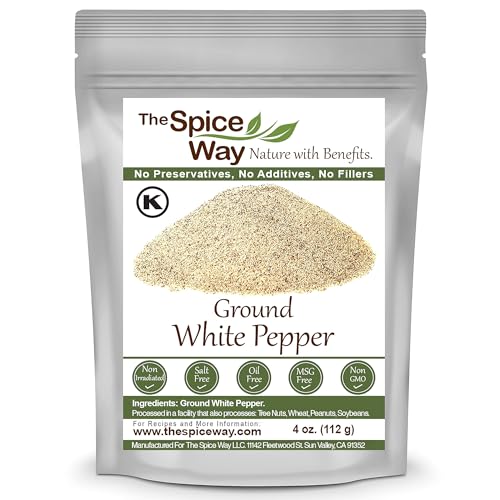
Most bad experiences with white pepper come from a tired supermarket tin of powder. You can do much better with very little effort.
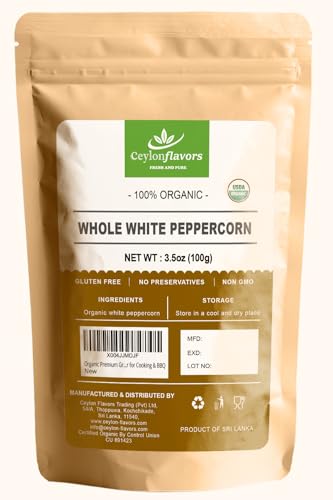
Buy it whole. Whole white peppercorns hold their fresh notes far longer than powder, and those notes are what keep the funk in balance. A cheap grinder dedicated to white pepper costs less than a takeout lunch.
Buy small. A little white pepper goes a long way. A small jar you finish in six months beats a big one that sits for two years.
Trust your nose. A faint musky note is normal. If the barnyard smell is the first thing that hits you, the jar is old or was badly processed. Replace it.
Store whichever you buy the way you would any spice: airtight, dark, and away from the stove.
Same Berry, Different Life
The pale jar on your shelf is not black pepper with something missing. It is what a pepper berry becomes when it is allowed to ripen, and then asked to give up everything but its heart.